
BisQue Ultra
A scientific Agentic AI workbench for data, models, and evidence.
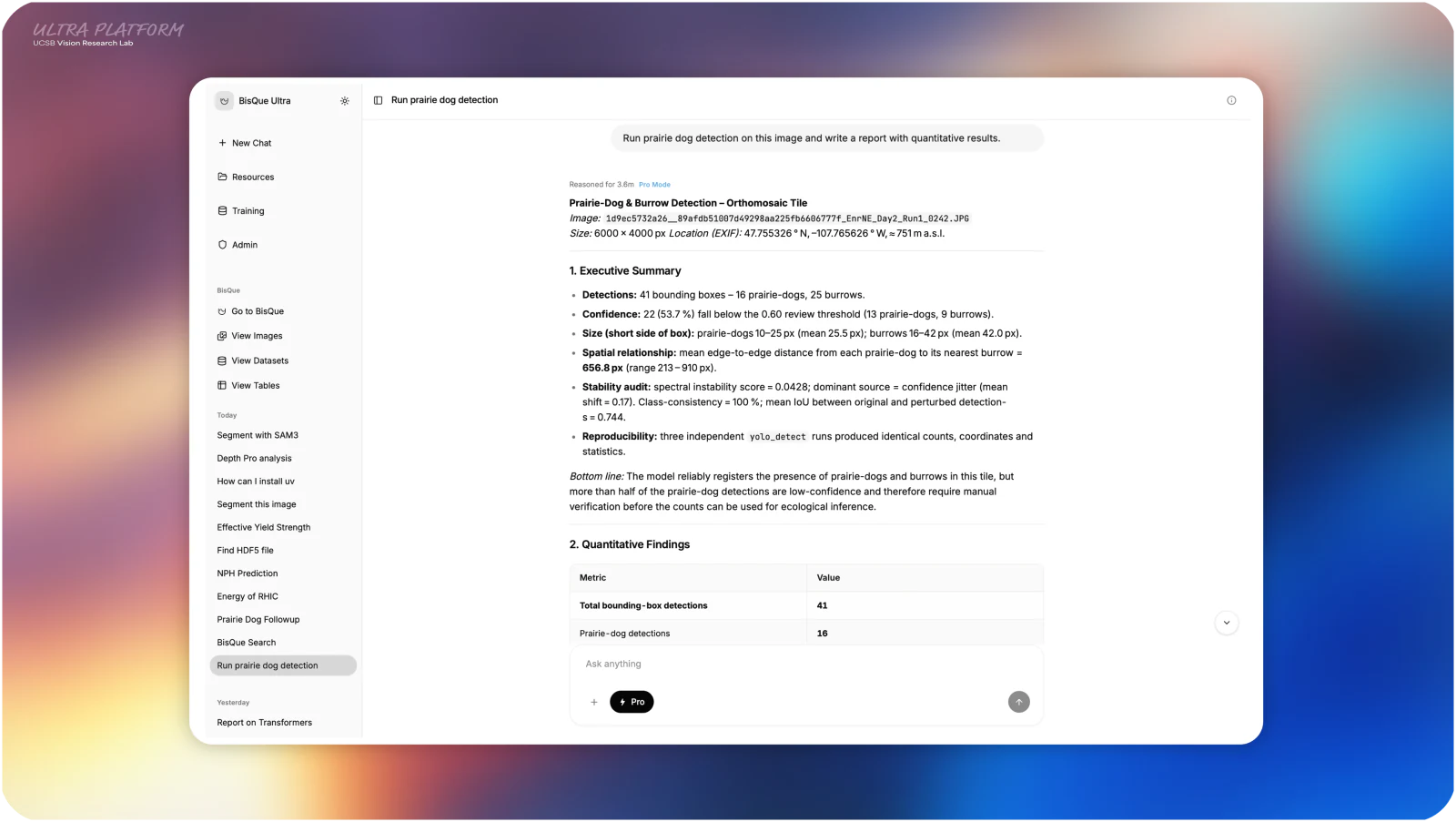
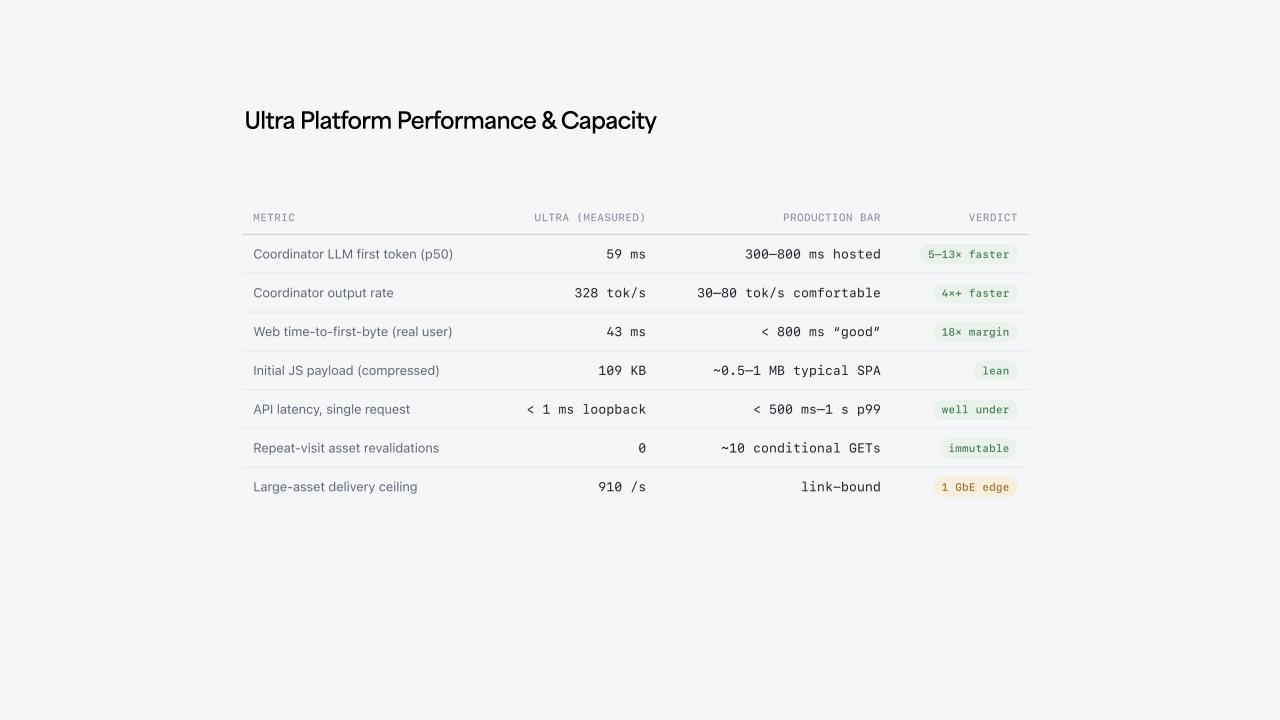
BisQue Ultra connects complex scientific data, tool-guided computation, durable analysis, and evidence-gated model operations in one inspectable research environment. It is built for the full path from a difficult file to a reviewable result — opening the formats produced by scientific instruments, keeping multidimensional viewers close to the source, routing language into tools and models, persisting long-running work, and preserving the figures, tables, metrics, reports, and run events that explain what happened.
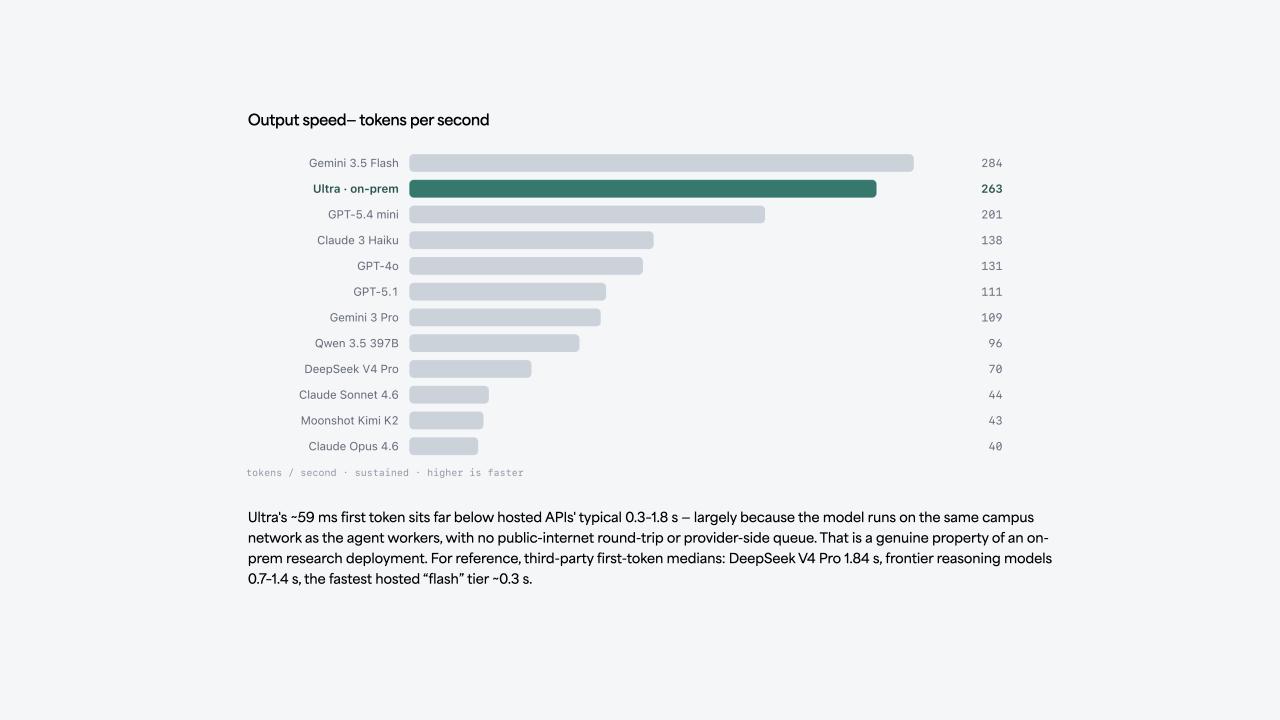
Scientific AI should do more than produce an answer. It should preserve the conditions under which that answer can be inspected, challenged, and reused. BisQue Ultra treats the source data, the computation, the model, and the resulting evidence as parts of one durable record.
A model can change. The scientific record should not.
Overview
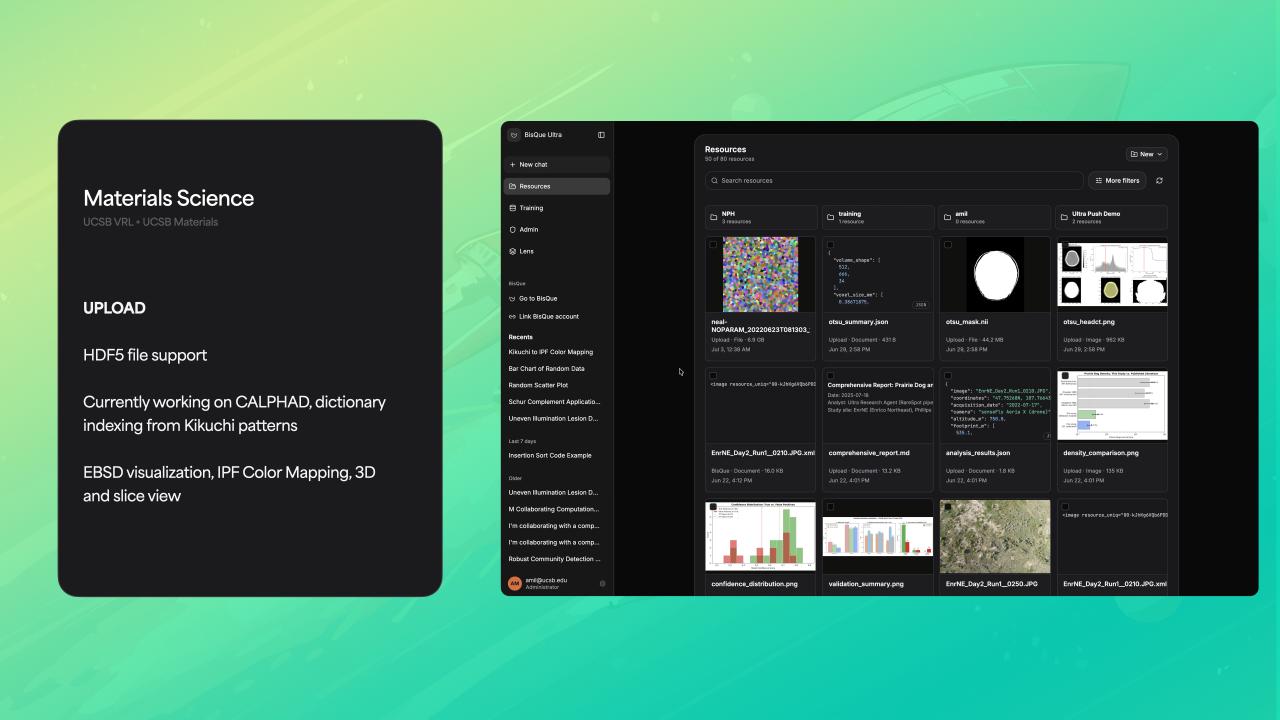
- 90+ scientific formats: tiled images, z-stacks, volumes, HDF5, video, and instrument metadata
- Multidimensional viewers kept close to the source data
- Language routed into tools, code, and models
- Durable, recoverable long-running runs
- Every result preserved: figures, tables, metrics, reports, run events
- Gold-gated training: benchmark, canary, promote, and roll back
- Evidence-aware domain tools across imaging, microscopy, ecology, chemistry, and materials
- Local-first and model-agnostic: OpenAI-compatible endpoints; BisQue optional
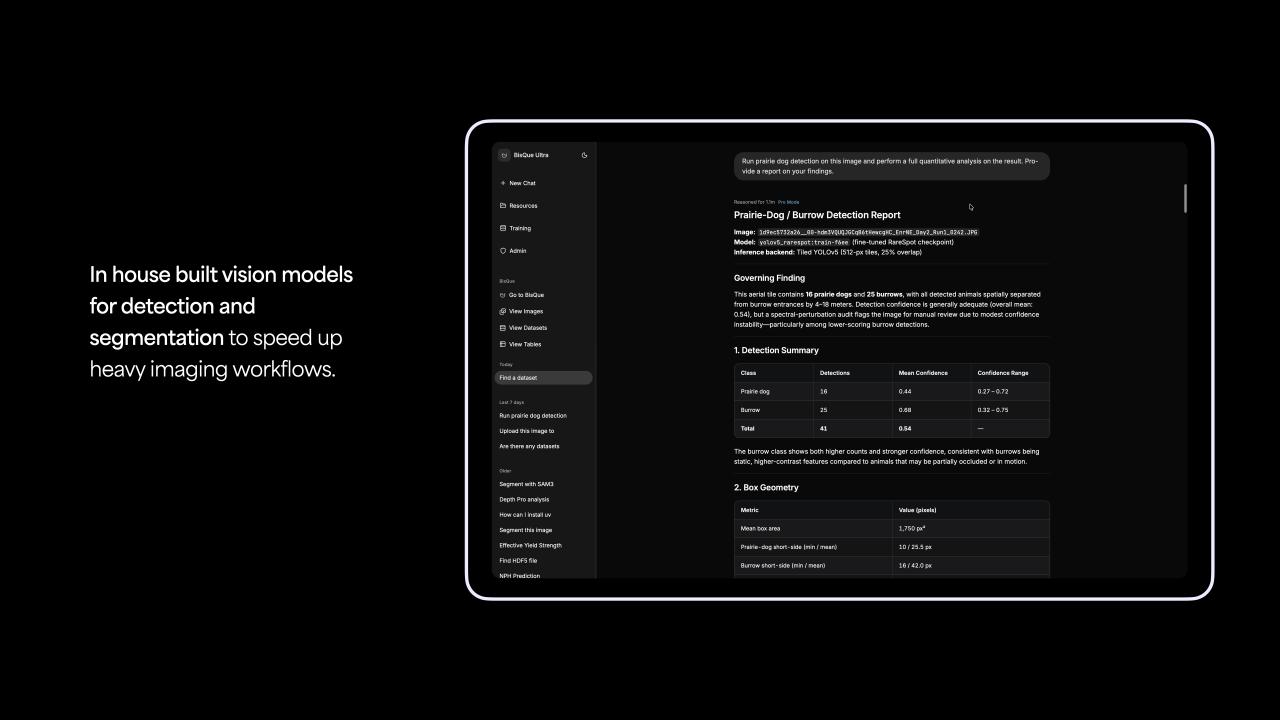
What the 2026.07 release includes
Scientific data as a first-class object
A dedicated image service opens more than 90 scientific formats and supports large tiled images, z-stacks, scalar volumes, HDF5 resources, video, and instrument metadata — without flattening them into generic attachments.
Durable, inspectable analysis
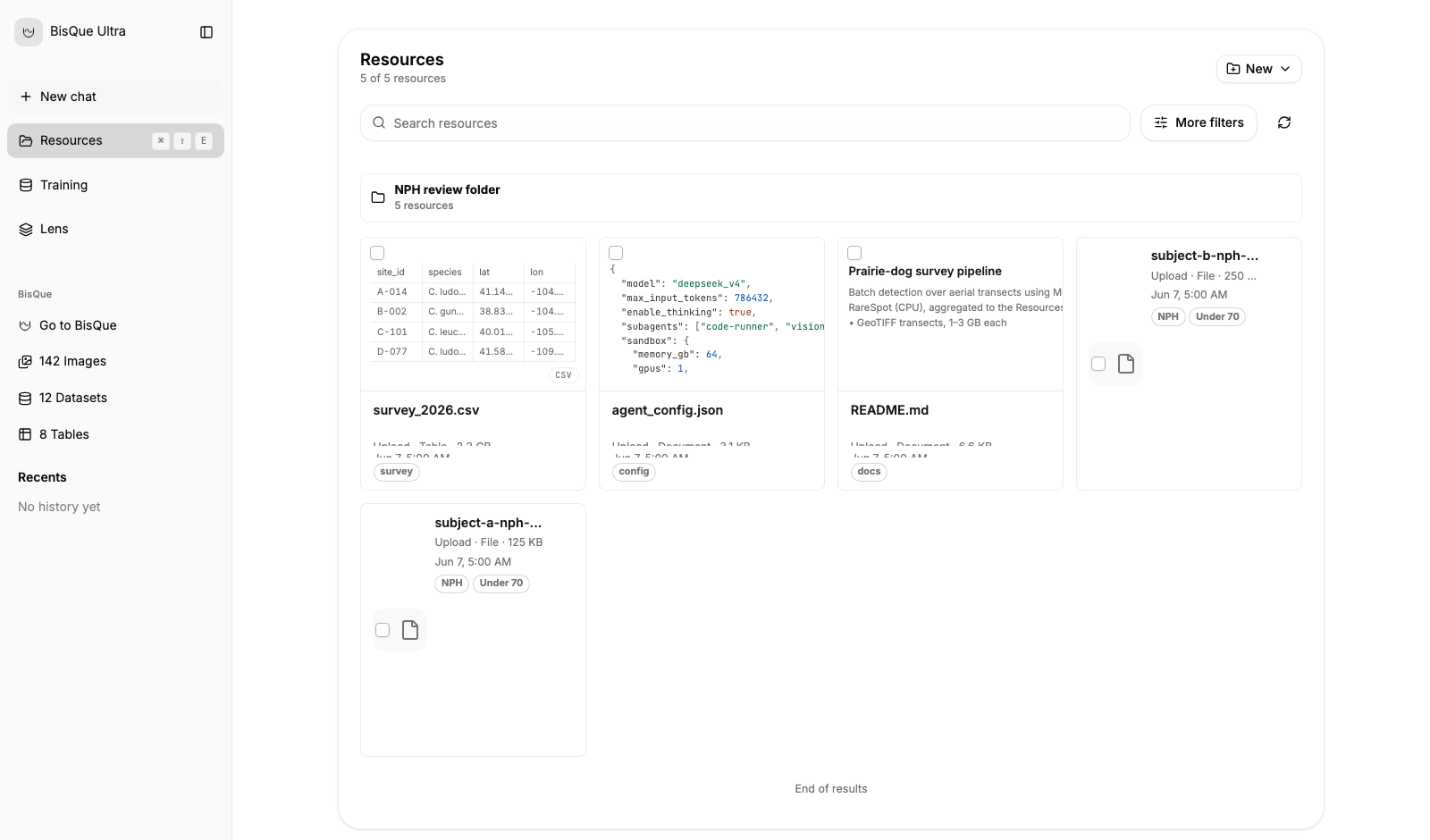
Tools, code, models, papers, reports, figures, tables, source files, and run events remain attached to the same analysis record, even when work outlives a browser session or worker process.
Gold-gated model operations
Teams can freeze a gold set, retrain, follow live progress, benchmark a candidate, reject regressions, route a canary, promote an active version, androll back. Newer weights are not treated as better until the declared evidence says they are.
Open, replaceable infrastructure
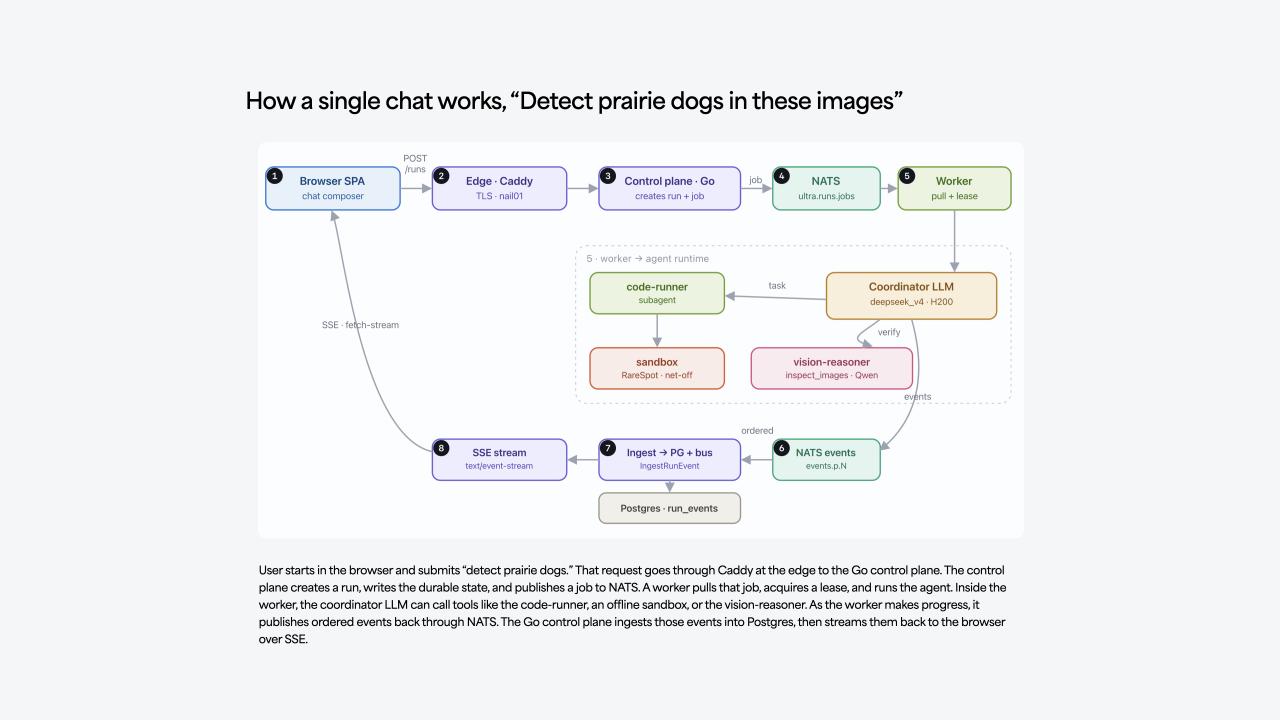
The local stack separates scientific resources, durable run control, worker execution, model serving, and the React workbench. An existing BisQue deployment is optional, and the worker can use an OpenAI-compatible model endpoint.
 Multimodal sensor data on OME-Zarr (NGFF)
BisQue Ultra treats OME-Zarr, the reference implementation of the OME Next-Generation File Format (NGFF), as a first-class way to hold multimodal, multidimensional sensor data. Every non-spatial dimension is modeled with canonical t / c / z / y / x axes, and each modality's identity lives in its axis units, OMERO channel labels, dtype, and coordinate transforms — read from tiled, multiscale pyramids under NGFF 0.4 and 0.5.
The reader is validated against a corpus of spec-correct stores spanning micro-CT and EBSD maps, confocal z-stacks and whole-slide RGB, Sentinel-2 and hyperspectral cubes, CT and multi-sequence MRI, seismic and GPR volumes, radio and solar timelapses, and non-image streams such as audio spectrograms, IR thermography, and MALDI mass-spectrometry imaging.
- Canonical NGFF axes (t/c/z/y/x) with real units, OMERO channel labels, and coordinate transforms
- NGFF 0.4 and 0.5 with tiled, multiscale pyramids
- Chunked, multiscale reads: only the region and resolution in view
- Spec-correct stores pass the full reader and render contract
- Malformed or adversarial stores fail closed (HTTP 422) — never crash or leak
- Bounded reads: symlinked chunks, decompression bombs, oversized planes/tiles, and non-renderable dtypes are refused at the door
- One production reader, renderer, and viewer-info service behind every request
- Concurrency-tested under sustained multi-threaded load with healthy caching
Spec-correct stores render. Adversarial stores fail closed. Reads stay bounded — a tiny file can never force a multi-gigabyte decode.
 One canonical model for every sensor
Whether the source is a confocal z-stack, a hyperspectral cube, a seismic volume, or an audio spectrogram, every non-spatial dimension is expressed with the same t/c/z/y/x axes. Units, channel labels, dtype, and coordinate transforms carry the modality's identity, so tools and viewers read one consistent structure instead of a per-instrument special case.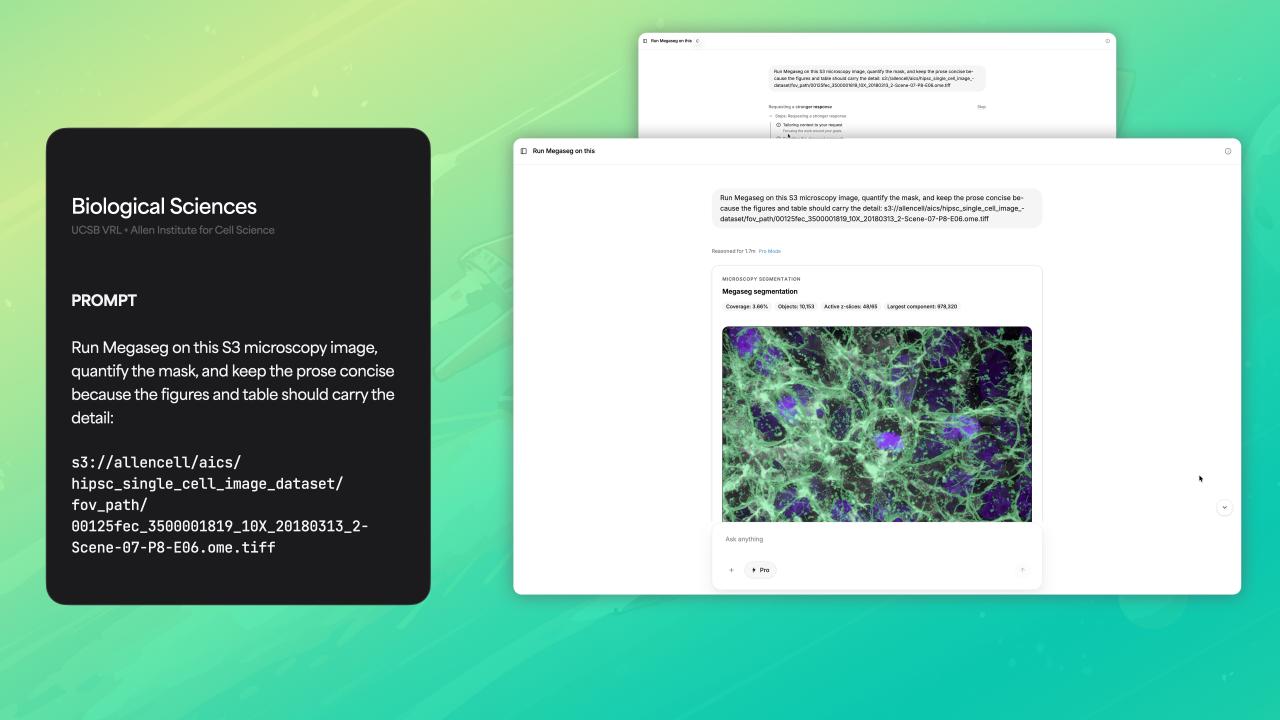
Hardened against hostile files
Scientific data arrives from many hands, and a malformed or malicious store should never take down a worker or expose the host. The reader refuses symlinked chunks, chunk-shape decompression bombs, unbounded full-plane and tile reads, deep attribute recursion, and non-renderable dtypes — returning a clean, bounded rejection instead of an out-of-memory crash or a data leak.
Bounded by design
Reads are capped so a three-kilobyte file cannot force a multi-gigabyte decode. Slices, thumbnails, and tiles downscale before they read, scale probes stay bounded across the corpus, and the service holds steady under a sustained, multi-threaded request storm.
Built for the files and failures of real research
Scientific work rarely fits inside a single request and response. It includes file staging, visual inspection, tool selection, code execution, model calls, generated artifacts, and review. Browsers refresh, workers restart, and services move — BisQue Ultra keeps the work recoverable through those ordinary failures while maintaining a legible path back to the data and decisions that produced each result.
The release is ambitious about capability and conservative about authority: where a required solver, dataset, or validation record is absent, the system is designed to fail closed rather than substitute an unsupported result. Current materials support is a research capability, not a production-readiness claim.
Access
BisQue Ultra is open to research teams working with complex scientific data, domain models, and reproducibility requirements. Tell us what you measure, what you need to run, and where the evidence currently breaks apart — reach out using the contacts below.
Contact
BisQue Ultra was created by Amil Khan in the UCSB Vision Research Lab, led by Professor B.S. Manjunath (Department of Electrical and Computer Engineering, UCSB).
This material is based upon work supported by the U.S. National Science Foundation under Grant No. 2411453. Any opinions, findings, and conclusions or recommendations expressed in this material are those of the author(s) and do not necessarily reflect the views of the National Science Foundation.