slide1.png

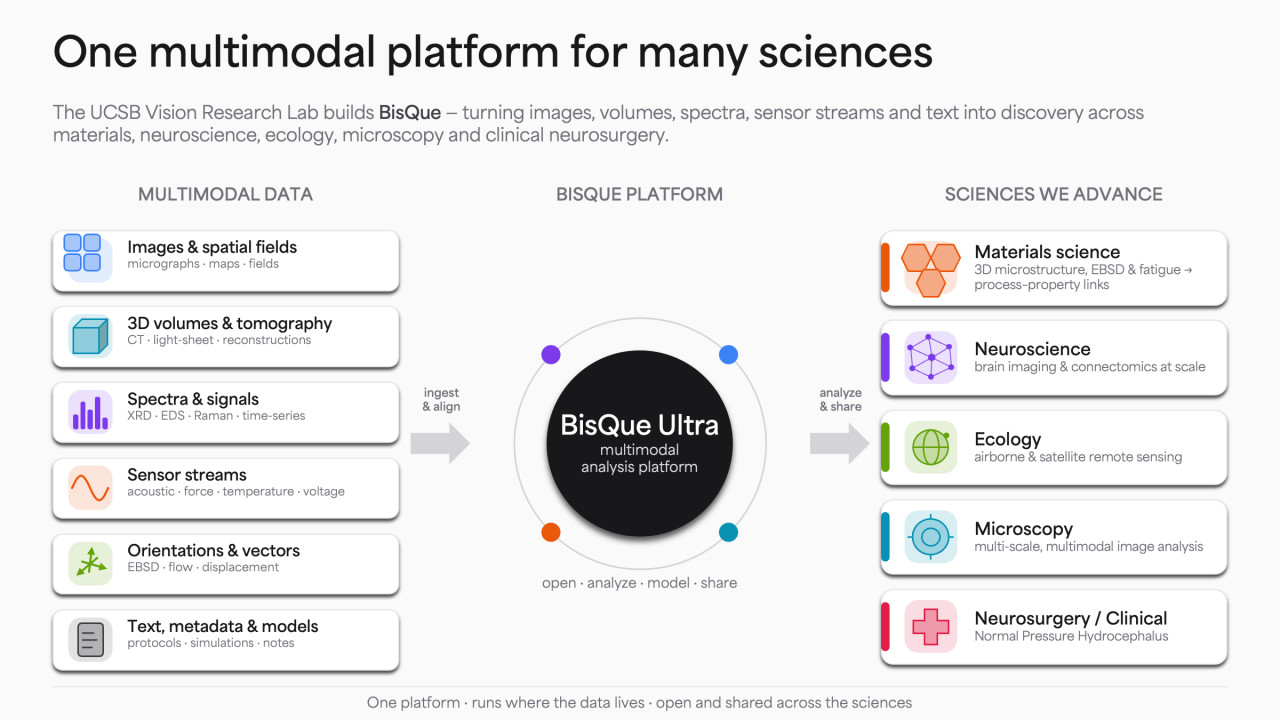
The Center for Multimodal Big Data Science and Healthcare builds tools that turn complex, messy scientific data — images, volumes, spectra, sensor streams, and more — into real discovery. Our flagship platform, BisQue, brings this data together so researchers across a wide range of scientific domains can organize, analyze, and share their findings at scale. BisQue Ultra extends this further with domain-tuned AI reasoning trained on scientific data, enabling deeper, more context-aware analysis.

BisQue keeps track of rich, flexible metadata alongside your data, lets you plug in custom analysis modules that run on compute clusters, and preserves full provenance so every result can be traced back to the workflow that produced it — all accessible from any browser and scalable from a single dataset to petabytes of multimodal scientific data.

The interdisciplinary research projects built on top of BisQue span four main areas: marine science, plant biology, materials science, and healthcare.

Bio-Image Informatics

Bio-Image Informatics

EM data and cellular segmentation

Materials Science & Structural Analysis

Materials Science & Structural Analysis

DREAM.3D and structural analysis
Healthcare

Healthcare

Patient monitoring and analytics

Marine Sciences

Marine Sciences

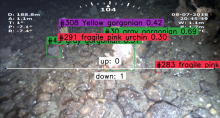
Underwater image segmentation and classification

BisQue Deep Learning Cyberinfrastructure

A feature in Research Outreach introduces the BisQue ecosystem — a cloud-based platform for sharing data and analysis methods and improving the reproducibility of computer-vision techniques across scientific disciplines, from materials and marine science to medical imaging.

Reproducible computer vision: cross-disciplinary and scalable image informatics →

BisQue Deep Learning Workshop, July 9–10, 2026

The center hosted a BisQue Deep Learning (BDL) Workshop at the University of California, Santa Barbara — an open, collaborative gathering of researchers working on deep learning, computer vision, continual learning, and uncertainty estimation for scientific image analysis.

The two-day workshop took place at UCSB from July 9–10, 2026, starting at 9:00 AM on the first day and adjourning by 4:30 PM on the second.

The workshop brought together computer vision researchers, ecologists, and materials scientists to strengthen the essential elements of automated computer-vision workflows in BisQue, with a primary focus on animal detection and monitoring. The main objective was to work through the full pipeline — from getting data into the platform, through continual learning and uncertainty estimation, to acting on model results — and to identify concrete next steps for the platform's capabilities, usability, and supporting training materials.

The first day focused on the BisQue platform and models: updates and demos of the latest capabilities including BisQue Ultra, data upload and the import/export of annotations, model selection and the model library, broader applications in remote and environmental sensing, and model evaluation, re-training, and fine-tuning. The second day addressed uncertainty estimation — how it is integrated into BisQue and used to guide annotation and model selection — along with LLM integration through BisQue Ultra, and an end-to-end deep dive into a complete animal-monitoring workflow.

Participants came from UC Santa Barbara, the Smithsonian's National Zoo & Conservation Biology Institute, UC Riverside, Stanford, Ohio State, the University of Arizona, and Google.

BDL Workshop, February 12, 2025

Workshop Agenda →

The center hosted a BisQue Deep Learning (BDL) Workshop at the University of California, Santa Barbara — a collaborative gathering of researchers working on deep learning, computer vision, continual learning, and uncertainty estimation for scientific image analysis.

The full-day workshop took place at UCSB in the Engineering Sciences Building (ESB 1001) on February 12, 2025, with registration at 8:30 AM and a 9:00 AM start.

This workshop brought together researchers on the theme of Multimodal Data Integration and Analytics using BisQue. Collaborators shared their current research and demonstrated how BisQue is enabling large-scale deep learning and computer vision workflows on their own scientific datasets, spanning applications from ecology to materials science. The day also featured focused discussions on the long-term sustainability of BisQue, community adoption of open-source platforms, and plans for evolving the codebase for the future.

LIMPID/BisQue + IDEAS Joint Workshop, February 3–5, 2020

Workshop Agenda →

The center hosted the second LIMPID/BisQue workshop on Scalable Image Informatics. This was a joint meeting with the workshop on Applications of Machine Learning and Scalable Image Informatics to Materials Discovery, held as part of the NSF-sponsored IDEAS program on Data-Driven Approaches to Materials Discovery, at the University of California, Santa Barbara. Participation was by invitation only, with over 80 registered participants.

The three-day joint workshop took place at UCSB from February 3–5, 2020. The workshop started at 8:00 AM on Monday, February 3rd and adjourned by 5:00 PM on Wednesday, February 5th.

This workshop brought together researchers from academia and national laboratories who are developing or have adopted new experimental methods and measurement tools that provide very large and rich data sets, with early adopters of machine learning as well as leaders in the machine learning community. The main objective of the LIMPID/BisQue workshop was to identify key requirements for scalability and sustainability of software infrastructures to support multimodal data analysis and machine learning in diverse application areas such as life sciences, marine science, materials and health sciences. A key objective of the IDEAS workshop was to connect researchers in the data sciences field with domain researchers to foster a dialogue and establish the state-of-the-art in the application of machine learning to materials discovery related disciplines, and to identify (i) the potential impact of, and opportunities for, data sciences in materials, with an emphasis on integrating experimental and computational materials; and (ii) the grand challenges at the intersection of materials discovery and machine learning.

Monday focused on sustainable software infrastructure for multimodal informatics and machine learning for image applications. Tuesday addressed data-driven approaches for advanced materials applications, effectively educating a workforce of data-driven innovators, and high-throughput approaches in computational mechanics. Wednesday focused on accelerating data-intensive research with a range of applications, and AI and ML for high-dimensional and multi-scale datasets.

Organizers: Samantha Daly, Mechanical Engineering, UCSB; B.S. Manjunath, Electrical and Computer Engineering, UCSB; Tresa Pollock, Materials, UCSB.

Recent Papers

(None)

Research

BisQue has been used to manage and analyze 10 hours of unexplored ocean habitats using underwater remotely operated vehicles and 23.3 hours (884GB) of high definition video from dives in Bering Sea submarine canyons to evaluate the density of fishes, structure-forming corals and sponges and to document and describe fishing damage. 

We propose a deep learning model to identify the characteristic differences in Computation Tomography (CT) scans between COVID-19 and other similar types of viral pneumonia

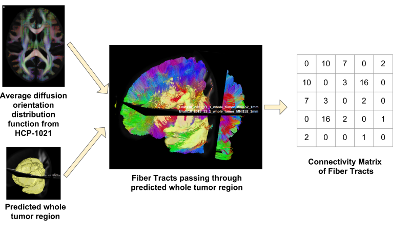
We propose a novel and efficient algorithm to model high-level topological structures of neuronal fibers.

We propose a novel weakly supervised method to improve the boundary of the 3D segmented nuclei utilizing an over-segmented image.

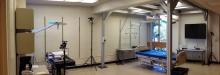
The Deep Eye-CU (DECU) project integrates temporal motion information with the multimodal multiview network to monitor patient sleep poses. It uses deep features, which slightly improved the patient sleep pose classification accuracy (when compared to the performance of engineered features such as Hu-moments and Histogram of Oriented Gradients (HOG)). The DECU also uses principles from Hidden Markov Models (HMMs) a popular technique in speech process. It leverages pose time-series data and assumes that patient motion can be modeled using a “state-machine” approach. However, HHMs are limited in their ability to model state duration. In a high level analysis, state duration is used to distinguish between poses and pseudo poses, which are transitory poses seen when patients move from one position to another. The DECU framework (system and algorithms) are currently deployed in a real medical ICU at Santa Barbara Cottage Hospital where study volunteers have consented to the study.

The Eye-CU project incorporates a multiview aspect of the network to successfully remove the complex and prohibitively expensive pressure mat. This work uses purely visual rgb and depth sensors position at relatively different locations (i.e., multiview). Eye-CU learns the weights the contribution of each sensor and view via couple-constrained Least-Squares (cc-LS) modality trust estimation algorithm. The Eye-CU system in combination with cc-LS successfully match the performance of the MEYE network while and reliably classifies patient poses in challenging scene conditions (variable illumination and various sensor occlusions).

For instance, the MEYE (multimodal ICU ) network focuses on the detection of patient sleep poses using multimodal sensor network data: cameras (rgb, depth, thermal), a pressure mat (flexible sensor array), and room environmental sensors (temperature, humidity, sound). The multimodal data allows the algorithms to deal with challenging scene conditions (partial sensor occlusions and illumination changes). The rooms sensors are used to trigger and tune modality weights.

The Multimodal Multiview Network for Healthcare is a collaborative effort between researchers from the Electrical and Computer Engineering Department at the University of California Santa Barbara and the intesivists and medical practitioners from the Medical Intensive Care Unit (MICU) at Santa Barbara Cottage Hospital. The Objective of the research is to improve quality of care by  monitoring patients and workflows in real ICU rooms. The network is non-disruptive and non-intrusive and the methods and protocols to protect and maintain the privacy of patients and staff.

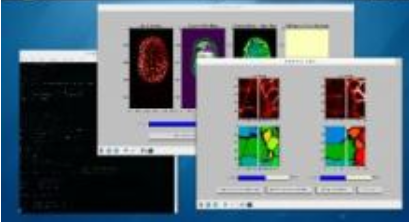
In this project, we integrate the Dream.3D software package into BisQue. Dream.3D is an open and modular software package that allows users to reconstruct, instantiate, quantify, mesh, handle and visualize microstructure digitally. By integrating it with BisQue, Dream.3D runs can be managed from any computer with a web browser, due to BisQue's web-based nature. Similarly, results and visualizations can be easily shared with collaborators right from a web page, without any software installation. In addition, analysis can be scaled out to run on compute clusters for faster exploration of parameter spaces. Furthermore, BisQue adds provenance tracking, allowing the Dream.3D user to understand exactly the data flow of inputs and outputs and the analysis settings. This greatly improves reproducibility and the understanding of analysis history.

The BisQue image analysis platform was used to develop algorithms to assay phenotypes such as directional root-tip growth or comparisons of seed size differences.

News

  • 2026-07. The team is hosting a two-day BisQue Deep Learning Workshop 2026 at UC Santa Barbara on July 9–10, 2026, bringing together researchers from UC Santa Barbara, the Smithsonian's National Zoo & Conservation Biology Institute, UC Riverside, Stanford, Ohio State, the University of
  • 2026-01. A deep-learning tool for detecting methane plumes in airborne hyperspectral imagery, using a spectral-absorption-aware transformer (UCSB VRL, CVPR 2023). Its Methane HotSpot (MHS) dataset, the largest public methane dataset is browsable directly in BisQue.
  • 2026-05. A new materials-science module, Micrograph Matcher (Match Any Imagery), lets researchers match micrographs directly in the browser — paired with the AmalgaMatch dataset, now hosted on BisQue in a browsable, visualizable format that you can explore in the web app or download in full.
  • 2025-02. The team hosted a full-day BisQue Deep Learning Workshop 2025 at UC Santa Barbara on February 12, 2025, gathering PIs, students, collaborators, and external advisory board members for research presentations, live demos, and discussions on long-term sustainability.
  • 2025-01.  A new deep learning module for Normal Pressure Hydrocephalus (NPH) prediction is now deployed on BisQue, using an adapted Segment Anything Model to segment brain CT scans — improving segmentation accuracy by 15% for ventricles and 19.1% for the subarachnoid space over the prior UNet model.
  • 2025-01. A new 3D defect-segmentation bisque module automates detection of voids and inclusions during serial sectioning of metals and alloys, removing a manual, time-consuming step before EBSD analysis in materials characterization workflows.
  • 2022-02. We are co-organizing a computational challenge at the ICLR 2022 workshop of geometry and topology. The goal is to push forward the field of computational differential geometry by asking participants to contribute statistics and learning algorithms on manifol
  • 2021-11. BisQue 2 has recently launched with a beta release! This new version of BisQue has a new storage backend and fully runs on Kubernetes. Active BisQue users should begin migrating any data stored on BisQue to BisQue 2, as BisQue will eventually be deprecated.
  • 2021-11. Despite vaccines being readily available for almost every age group, Covid-19 still remains a fatal disease if not detected early enough. As such, two Covid-19 detection modules are making their way to BisQue's cloud platform in the near future.
  • 2021-11. Normal Pressure Hydrocephalus (NPH) is a disorder in which ventricles in the brain swell from an accumulation of excess cerebrospinal fluid. This disorder can lead to difficulty in walking, thinking, and other daily functions.
  • 2021-11. The BioShape lab has been awarded an NIH R01 grant for biological shape reconstruction. The lab aims to introduce geometric and deep learning methods to enhance 3D biological shape reconstruction. Collaborators:
  • 2021-11. BisQue has now moved its entire orchestration system to align with the latest software trends for distributed systems. With the move to Kubernetes, BisQue is now highly available (fault tolerant) and scalable across multiple nodes.
  • 2020-02. An accurate 3D cell segmentation module utilizing a 3D U-Net based neural network, a 3D watershed algorithm applied to a probability map, and CRF refinement has been integrated into the BisQue cloud platform.
  • 2017-12. UCSB researchers given the award from NSF’s Office of Advanced Cyberinfrastructure to build a large-scale distributed image-processing infrastructure (LIMPID) through a broad, interdisciplinary collaboration.
  • 2020-02. The center we will be hosting the second LIMPID/BisQue workshop on Scalable Image Informatics.
  • 2026-07.

Software and Resources

LIMPID/BisQue

Bisque is an advanced image database and analysis system for multimocal images. It supports large scale image databases, flexible experimental data management, metatdata and content based search, analysis integration and knowledge discovery. The system is based on scalable web services.  

Read more about LIMPID/BisQue in this Outreach Article.

Resources

Github Code : https://github.com/UCSB-VRL/bisqueUCSB
Github Pages: https://ucsb-vrl.github.io/bisqueUCSB

Contact

B.S. Manjunath
Distinguished Professor, Electrical and Computer Engineering Department
Director, Center for Multimodal Big Data Science and Healthcare
University of California
Santa Barbara, CA 93106-9560

Tel: (805) 893 7112
E-mail: manj [at] ucsb [dot] edu